
People
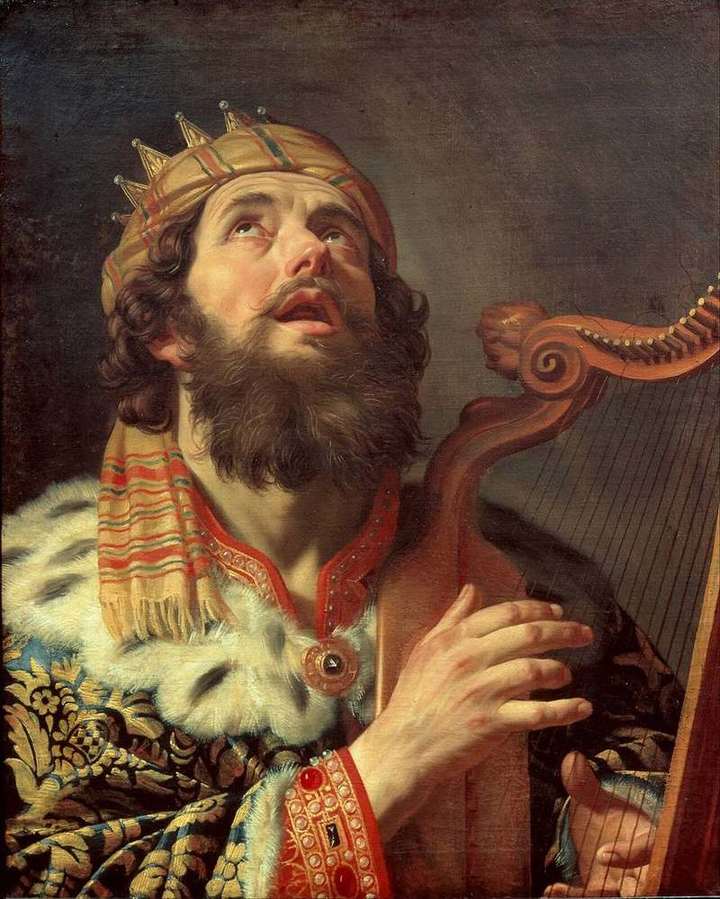
King David: shepherd, king and sinner forgiven
The youngest son of Jesse becomes Israel’s greatest king, then falls hard and repents just as famously. God promises him a throne that lasts forever.
Key verse
But Yahweh said to Samuel, “Don’t look on his face, or on the height of his stature, because I have rejected him; for I don’t see as man sees. For man looks at the outward appearance, but Yahweh looks at the heart.”1 Samuel 16:7
World English Bible (public domain)
Who was David?
Youngest son of Jesse of Bethlehem in Judah, a shepherd, musician, warrior, and king of Israel (c. 1010-970 BC).
The world David lived in
Shepherds defended flocks against predators with slings and clubs. Kings were called 'shepherds' across the ancient Near East. Sling stones were deadly weapons.
What stands out
The overlooked youngest son becomes Israel's greatest king and 'a man after God's own heart.' Yet he commits adultery and murder, and his repentance (Psalm 51) is as famous as his victories.
What modern readers often miss
- The Tel Dan inscription (9th century BC) mentions the 'House of David,' the first evidence outside the Bible.
- 'After God's own heart' means 'of God's choosing' as much as 'like God.'
- God's covenant with David (2 Sam 7) promises an eternal throne, fulfilled in Jesus, 'son of David.'
- Psalm 51 shows true repentance: confessing sin as against God, asking for a new heart, not just avoiding consequences.
The culture behind the text
Study notes
Key passages
How the Bible connects it
Every cross-reference in Lampstead says why it’s linked. A few from this page:
Don’t judge according to appearance, but judge righteous judgment.1 Samuel 16:7 → Jeremiah 17:10Why: I search the heart
“I, Yahweh, search the mind. I try the heart, even to give every man according to his ways, according to the fruit of his doings.”1 Samuel 16:7 → Luke 16:15Why: God knows your hearts
He said to them, “You are those who justify yourselves in the sight of men, but God knows your hearts. For that which is exalted among men is an abomination in the sight of God.”1 Samuel 16:7 → Isaiah 55:8-9Why: My thoughts are not your thoughts
“For my thoughts are not your thoughts, and your ways are not my ways,” says Yahweh. “For as the heavens are higher than the earth, so are my ways higher than your ways, and my thoughts than your thoughts.”2 Samuel 7:16 → Psalm 89:36-37Why: Psalm 89 also says David's throne will endure like the sun and moon
His offspring will endure forever, his throne like the sun before me. It will be established forever like the moon, the faithful witness in the sky. Selah.2 Samuel 7:16 → 1 Chronicles 17:13-14Why: Chronicles records the same promise of a kingdom established forever
I will be his father, and he will be my son. I will not take my loving kindness away from him, as I took it from him who was before you; but I will settle him in my house and in my kingdom forever. His throne will be established forever.”’2 Samuel 7:16 → Luke 1:32-33Why: Luke says Jesus will receive David's throne forever
He will be great and will be called the Son of the Most High. The Lord God will give him the throne of his father David, and he will reign over the house of Jacob forever. There will be no end to his Kingdom.2 Samuel 7:16 → 2 Samuel 7:13Why: God promised to establish his throne forever
He will build a house for my name, and I will establish the throne of his kingdom forever.
Study this deeper in Lampstead
Read 1 Samuel 16 with verse-by-verse study notes, cross-references that explain why they’re linked, people and places. Free during the beta.
Open 1 Samuel 16See all Lampstead appsRelated
Sources behind these notes: Tel Dan Stele (discovered 1993); Mesha Stele possible 'House of David' reading (debated).; Louvre: Mesha Stele (AO 5066); The Jewish Museum: Tel Dan Stele (loan from Israel Antiquities Authority); Matthew Henry, Commentary on the Whole Bible (1706). Bible text: World English Bible (public domain).