
Themes
Covenant: how God binds himself to his people
A covenant is a binding promise sealed with a sign. The Bible’s story moves from covenant to covenant, and each one tells you something about God.
Key verse
“But this is the covenant that I will make with the house of Israel after those days,” says Yahweh: “I will put my law in their inward parts, and I will write it in their heart. I will be their God, and they shall be my people.”Jeremiah 31:33
World English Bible (public domain)
“Cutting” a covenant
Hebrew speaks of “cutting” a covenant. In ancient treaties, the parties walked between halved animals, saying in effect, “May this happen to me if I break my word.” In Genesis 15 only God passes through, as a smoking furnace and a torch, while Abraham sleeps.
Signs and promises
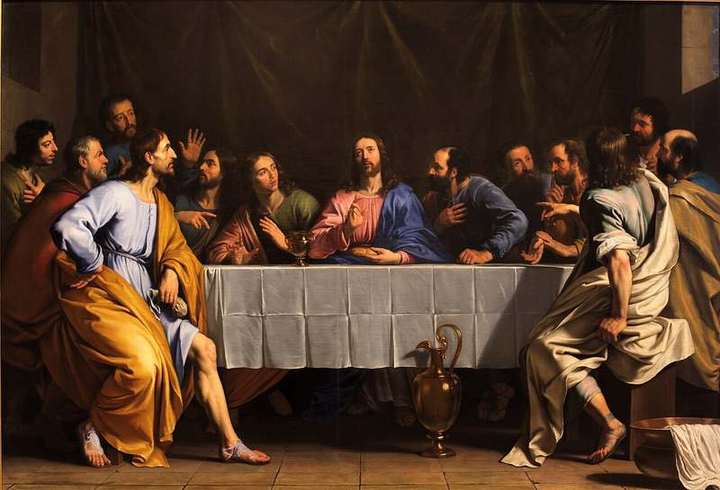
Each covenant has a sign or a promise attached: circumcision for Abraham’s family, an eternal throne for David’s house, and finally a covenant written on the heart, which Jesus names at the Last Supper.
The culture behind the text
Study notes
Key passages
How the Bible connects it
Every cross-reference in Lampstead says why it’s linked. A few from this page:
I will give the men who have transgressed my covenant, who have not performed the words of the covenant which they made before me when they cut the calf in two and passed between its parts: the princes of Judah, the princes of Jerusalem, the eunuchs, the priests, and all the people of the land, who passed between the parts of the calf.Genesis 15:17 → Judges 6:21Why: God shows his presence with fire consuming an offering in both
Then Yahweh’s angel stretched out the end of the staff that was in his hand, and touched the meat and the unleavened cakes; and fire went up out of the rock and consumed the meat and the unleavened cakes. Then Yahweh’s angel departed out of his sight.Genesis 15:17 → Jeremiah 11:4Why: Jeremiah calls Egypt an iron furnace, and a smoking furnace appears here
…which I commanded your fathers in the day that I brought them out of the land of Egypt, out of the iron furnace,’ saying, ‘Obey my voice and do them, according to all which I command you; so you shall be my people, and I will be your God…Genesis 15:17 → 1 Chronicles 21:26Why: God answers with fire at a sacrifice in both
David built an altar to Yahweh there, and offered burnt offerings and peace offerings, and called on Yahweh; and he answered him from the sky by fire on the altar of burnt offering.Jeremiah 31:31 → Jeremiah 33:14-16Why: The days that are coming bring both the new covenant and the righteous Branch
“Behold, the days come,” says Yahweh, “that I will perform that good word which I have spoken concerning the house of Israel and concerning the house of Judah. “In those days and at that time, I will cause a Branch of righteousness to grow up to David. He will execute justice and righteousness in the land. In those days Judah will be saved, and Jerusalem will dwell safely. This is the name by which she will be called: Yahweh our righteousness.””Jeremiah 31:31 → Hebrews 8:6-13Why: Hebrews quotes Jeremiah's new covenant at length to show Christ's covenant is better than the old
But now he has obtained a more excellent ministry, by as much as he is also the mediator of a better covenant, which on better promises has been given as law …Jeremiah 31:31 → Hebrews 10:16-17Why: Hebrews quotes this new covenant promise and applies it to Christ
“This is the covenant that I will make with them after those days,” says the Lord, “I will put my laws on their heart, I will also write them on their mind;” then he says, “I will remember their sins and their iniquities no more.”
Study this deeper in Lampstead
Read Genesis 15 with verse-by-verse study notes, cross-references that explain why they’re linked, people and places. Free during the beta.
Open Genesis 15See all Lampstead appsRelated
Sources behind these notes: Keil & Delitzsch, Commentary on the Old Testament (1866–91); International Standard Bible Encyclopedia (1915), "Covenant". Bible text: World English Bible (public domain).