
Stories & culture
The Prodigal Son, in its world
Jesus tells this parable to grumbling Pharisees. Every detail, from the early inheritance to the running father, would have startled a village audience.
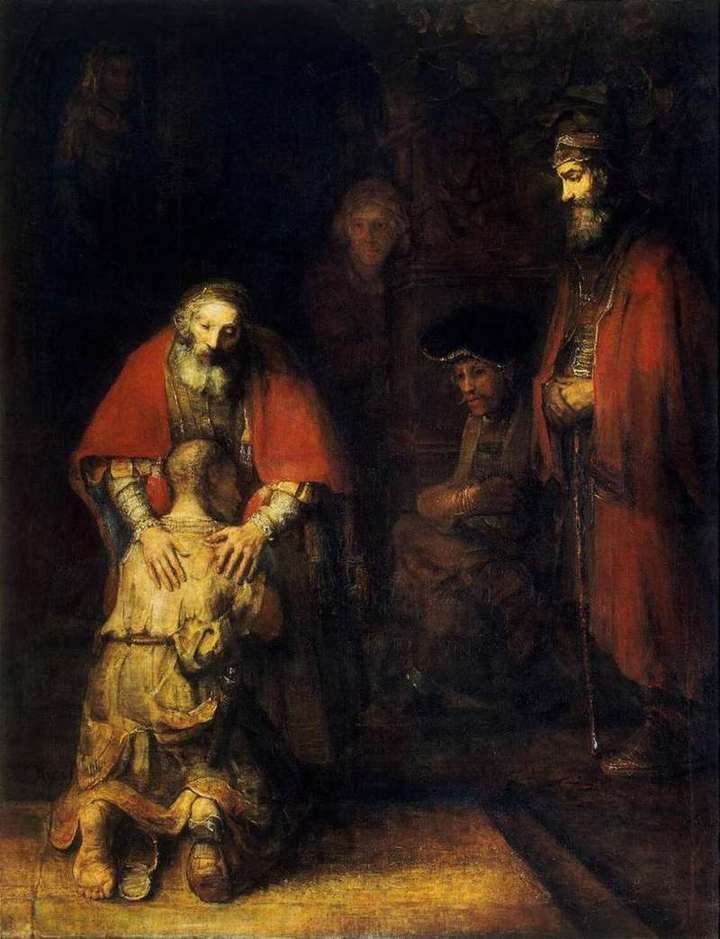
Key verse
“He arose and came to his father. But while he was still far off, his father saw him and was moved with compassion, and ran, fell on his neck, and kissed him.”Luke 15:20
World English Bible (public domain)
The story in brief
Luke 15:1-2Sinners came to hear Jesus. Pharisees grumbled, "This man welcomes sinners."Luke 15:11-12A younger son asked his father for his share of the inheritance.Luke 15:13He went to a far country and wasted it in reckless living.Luke 15:15-16Starving, he fed pigs and longed to eat their pods.Luke 15:17-19He came to himself: "I will get up and go to my father."Luke 15:20While he was still far off, his father saw him, ran, and kissed him.Luke 15:22-24"Bring out the best robe... This, my son, was dead, and is alive again."Luke 15:28-30The older brother was angry and would not go in.Luke 15:31-32"Son, you are always with me... it was appropriate to celebrate."
The culture behind the text
Lost sheep and lost coinThe coin may have been part of a woman's dowry headdress or her savings. Houses were dark with small windows and dirt floors, so she had to light a lamp and sweep.Luke 15:3-10
A son asking for his inheritanceAsking for an inheritance while a father was alive was like saying, "I wish you were dead." Selling land shamed the family before the village. Many scholars, following Kenneth Bailey, see this as a known insult in Middle Eastern culture.Luke 15:11-13
A father runningOlder men didn't run in that culture; it meant pulling up robes and exposing legs. The father runs to his son, taking shame on himself, perhaps also protecting him from village anger. The robe, ring, and sandals restore him as a son, not a hired servant.Luke 15:20-24
The older brotherRefusing to go in to the feast publicly insulted the father. The father goes out to him too. The parable ends without saying whether the older brother came in, aimed at the Pharisees listening.Luke 15:25-32
Study notes
The prodigal son · Luke 15:11Asking for inheritance early was like wishing his father dead. The father running was undignified for an elder.His father ran · Luke 15:20In village culture, an older man running would be undignified. The father runs, embraces and kisses the son before he can finish his confession.The older brother refused to go in · Luke 15:28The parable's real ending is open: will the resentful older brother, like the Pharisees grumbling in 15:2, join the celebration?
How the Bible connects it
Every cross-reference in Lampstead says why it’s linked. A few from this page:
Luke 15:20 → Genesis 46:29Why: The father running to embrace his son echoes Joseph falling on Jacob's neck and weeping at their reunion
Joseph prepared his chariot, and went up to meet Israel, his father, in Goshen. He presented himself to him, and fell on his neck, and wept on his neck a good while.Luke 15:20 → Psalm 103:10-13Why: God does not deal with us as our sins deserve, but has compassion like a father
He has not dealt with us according to our sins, nor repaid us for our iniquities …Luke 15:20 → Psalm 86:5Why: God is good and ready to forgive, as the father runs to his son
For you, Lord, are good, and ready to forgive, abundant in loving kindness to all those who call on you.Luke 15:20 → Psalm 86:15Why: God is merciful and gracious, abounding in love, the father's welcome
But you, Lord, are a merciful and gracious God, slow to anger, and abundant in loving kindness and truth.
Study this deeper in Lampstead
Read Luke 15 with verse-by-verse study notes, cross-references that explain why they’re linked, people and places. Free during the beta.
Open Luke 15See all Lampstead appsRelated
Sources behind these notes: Matthew Henry, Commentary on the Whole Bible (1706); Albert Barnes, Notes on the Bible (1834–85). Bible text: World English Bible (public domain).